


International freight transport involves more than moving a truck from one country to another. To ensure that goods reach their destination without delays, commercial, transport and customs documents must be prepared correctly from the outset.
Companies importing or exporting goods to and from European countries must pay attention to the documents required for transport, customs clearance, confirmation of the value and origin of goods, and compliance with the requirements applicable in the importing or exporting country.
This article explains which documents may be required for importing and exporting goods, the purpose of each document and why it is important to work with a transport company that can provide logistics support and customs brokerage.
Umav Trans provides international road transport, logistics, warehousing, cargo consolidation and customs brokerage through its own customs brokers, including on its main Moldova–Italy–Moldova route.
In international transport, documents confirm who the seller and buyer are, what goods are being transported, their value and origin, where they must be delivered and under which conditions the transport is carried out.
If documents are incomplete, incorrect or do not match the transported goods, border delays, additional queries, unexpected costs or customs-clearance problems may arise.
Document preparation should therefore not be left until the last moment. Companies importing or exporting goods should check the paperwork before loading, not after the truck reaches customs.
Documents may vary according to:
In general, import and export documents can be divided into several main categories:
Not every document is required for every shipment. Some are necessary for almost all international commercial operations, while others apply only to certain goods or situations.
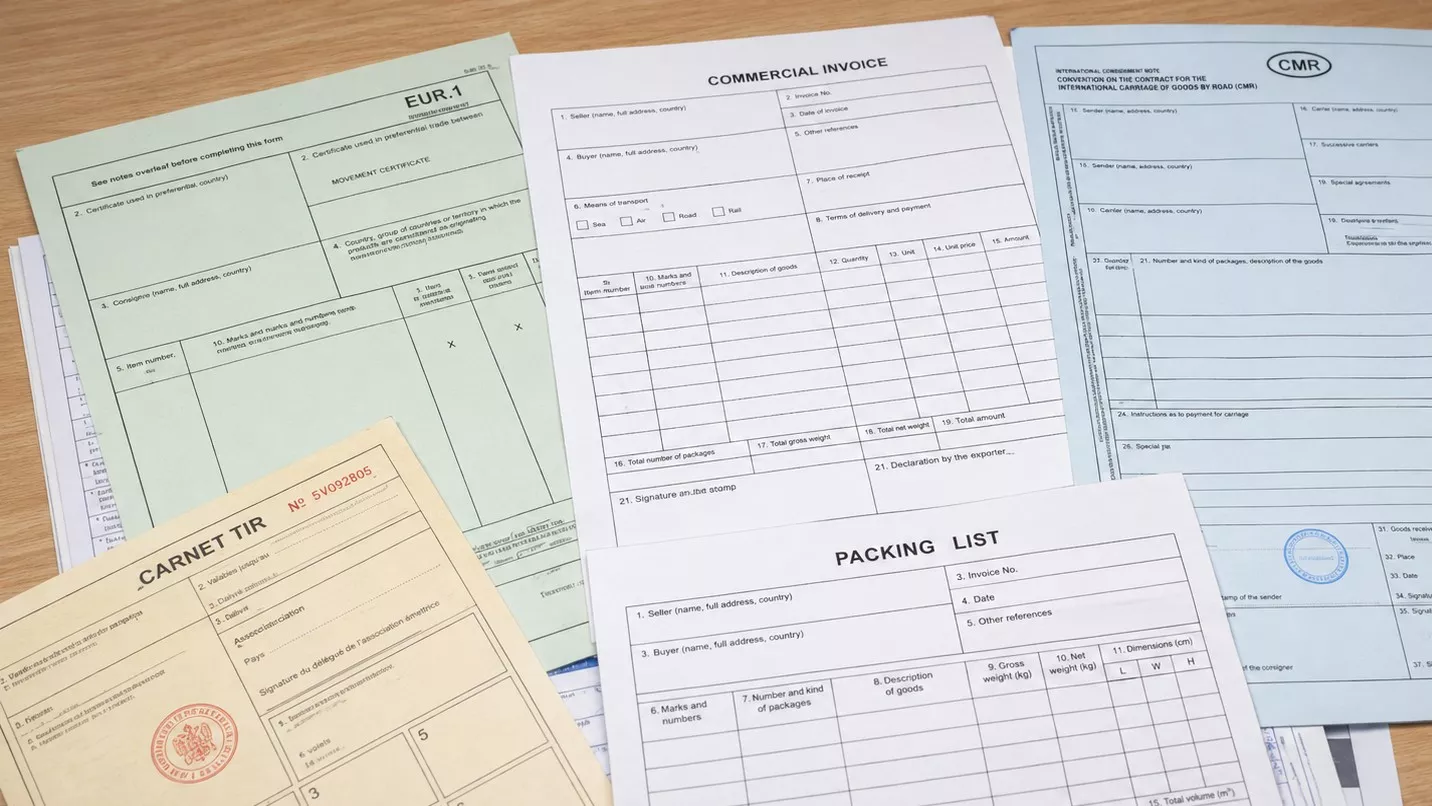
The commercial invoice is one of the most important documents in the import and export of goods. It confirms the transaction between seller and buyer and contains information about the delivered goods, their value and the commercial terms.
A commercial invoice may normally include:
The commercial invoice is used to determine the value of the goods and for customs clearance. The information must therefore be clear and match the actual goods, packing list and transport documents.
A common mistake is using descriptions that are too general, such as “goods”, “products” or “equipment”, without sufficient detail. For customs clearance, the goods must be described as clearly and precisely as possible.
The packing list describes how the goods are packaged. It supplements the commercial invoice and provides information about the number of packages and pallets, weight, dimensions and contents of each packaging unit.
A packing list may include:
The packing list is very useful for the carrier, customs broker, warehouse and customs authorities. It helps check the goods and match the documents to the actual load.
For groupage transport, the packing list is even more important because goods from several customers may be consolidated in the same truck. A clear description of packages, pallets and weight helps organise the shipment and avoid confusion.
The CMR consignment note is the transport document used in international road freight transport. It confirms that the carrier has received the goods and contains information about the consignor, consignee, loading and unloading locations and the transported goods.
The CMR may include:
The CMR is important for all parties involved: consignor, carrier, consignee and, in certain situations, the authorities. It is a fundamental document in international road transport.
For the document to be useful, the information in the CMR must match the commercial invoice, packing list and customs documents.
The customs declaration is the document through which goods are declared to the customs authorities. It is required for import or export procedures and includes information about the goods, value, origin, tariff code, customs procedure and other relevant details.
The customs declaration is usually prepared with the support of a customs broker, as correct completion requires knowledge of customs requirements and commercial information.
The customs declaration may require documents such as:
Umav Trans provides support through its own customs brokers, helping customers manage paperwork and customs procedures more easily.
For details about this service, see the page Customs brokerage.
A certificate of origin confirms the country of origin of the goods. It may be requested for certain commercial operations depending on the importing country’s requirements, trade agreements or requests from partners.
The origin of the goods is not always the same as the country from which they are shipped. For example, goods may be dispatched from one European country but originate in another. Origin documents must therefore be handled carefully.
A certificate of origin may be required for:
The EUR.1 certificate confirms the preferential origin of goods where the applicable conditions are met. It can be important in international trade because it may affect the tariff treatment of goods.
Not every shipment requires an EUR.1 certificate. The need for this document depends on the origin of the goods, applicable trade agreements and the requirements of the import or export operation.
In practice, determining whether an EUR.1 certificate is required involves analysing:
Umav Trans can assist with the EUR.1 certificate as part of its customs brokerage services where the document is required.
A commercial contract is not always the first document a company considers when preparing transport, but it can be important in many import or export operations.
The contract may confirm the relationship between seller and buyer, commercial terms, responsibilities of the parties, delivery terms and other important details.
In certain situations, the customs broker or authorities may request the contract or other documents confirming the transaction.
A clear contract also helps avoid misunderstandings between partners, especially when transport includes several stages, warehousing, consolidation or delivery to another country.
When importing goods from European countries, the importing company must prepare the documents required for transport and customs clearance. The list may vary according to the goods, country of origin, country of dispatch and customs requirements.
In general, imports may require:
Importers should check documents received from the supplier before loading. Errors in the invoice, packing list or origin documents can cause problems during customs clearance.
It is therefore advisable for the importer to send the documents to the customs broker before the goods reach the border.
When exporting goods to European countries, the exporting company must prepare commercial and transport documents and, where applicable, origin documents.
In general, exports may require:
Exporters must state the goods description, quantity, weight and value correctly. The information in the documents must be consistent.
For exports to Italy or other European countries, documents should be checked in advance, especially when the customer requests a certificate of origin, an EUR.1 certificate or other additional documents.
In addition to commercial and transport documents, certain goods may require special documentation. This depends on the product category, applicable regulations and requirements of the importing country.
Depending on the case, special documents may include:
Not every type of goods requires such documents. However, if a product belongs to a regulated category, missing documentation can cause delays or make it impossible to complete the procedures.
The type of goods must therefore be communicated clearly from the outset.
To be useful in transport and customs clearance, documents must contain clear and accurate information.
The most important information includes:
Clear documentation reduces the risk of additional questions and improves coordination between the consignor, carrier, customs broker and consignee.
Many problems arise not from the transport itself but from incorrectly prepared documents. Even a small error can lead to queries, delays or additional costs.
Common mistakes include:
To avoid such situations, documents must be checked before loading.
The customs broker plays an important role in the import and export process, helping prepare, check and process documents required for customs operations.
A customs broker can assist with:
For companies that import or export regularly, working with a customs broker can save time and reduce the risk of errors.
Umav Trans provides customs brokerage through its own brokers, enabling better coordination between transport, logistics and documentation.
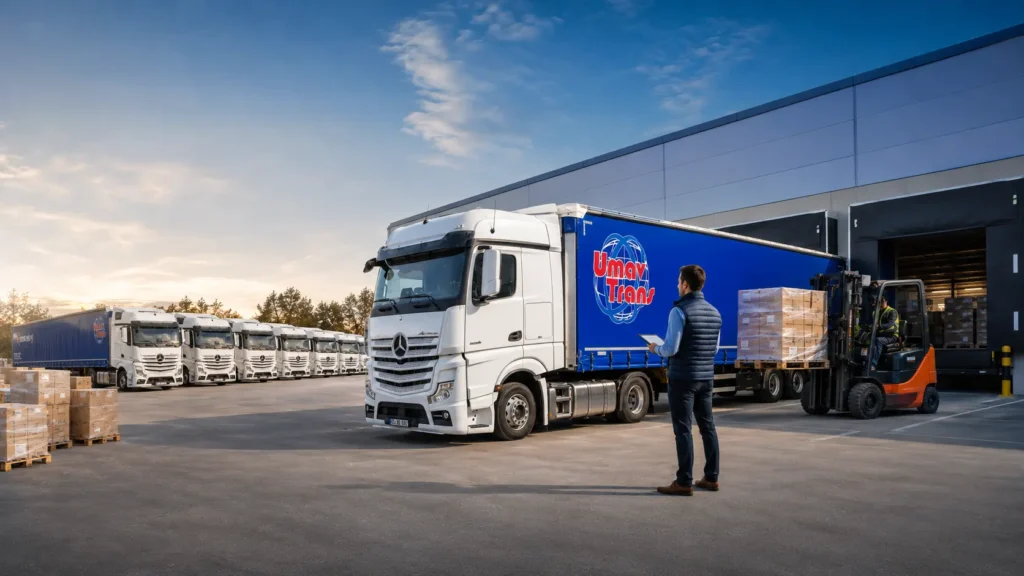
Umav Trans provides integrated services for companies transporting goods to and from European countries. In addition to international road transport, the company can provide logistics, warehousing, cargo consolidation and customs brokerage support.
Umav Trans services may include:
This approach helps customers manage transport, documents and logistics stages more easily.
Before transport, check that the main documents have been prepared.
Reference checklist:
This list is indicative. The exact documents may vary depending on the goods, country and customs procedure.
If you import or export goods to or from European countries, the Umav Trans team can help with international transport, logistics, warehousing, consolidation and customs brokerage.
Contact us and provide details about the goods, route, volume, weight and available documents. We will recommend the right solution for transport and documentation.