


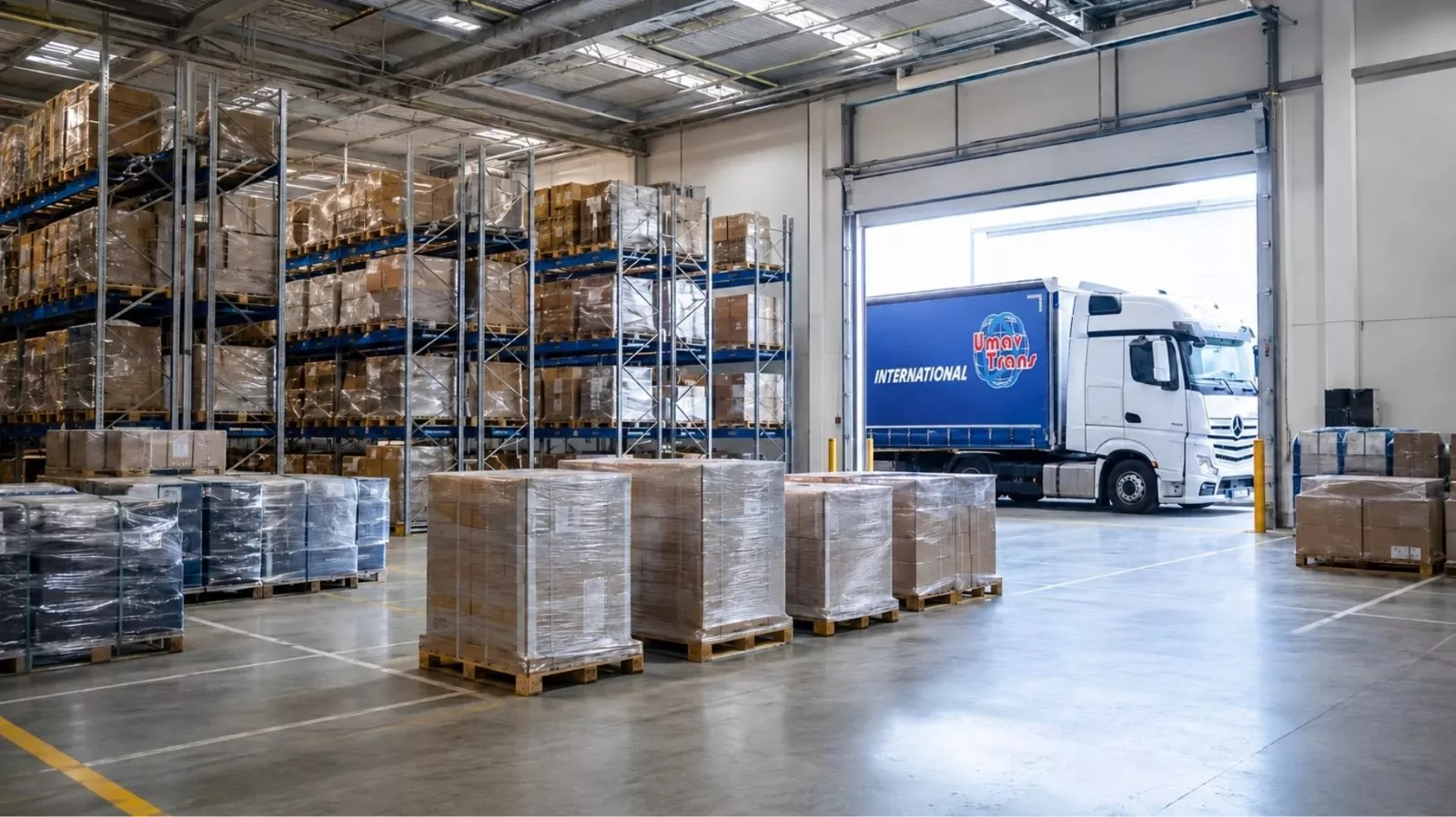
In international transport, not all goods are immediately ready for delivery. Sometimes goods need to be collected from several locations, stored temporarily in a warehouse, grouped with other loads or prepared for transport before the truck departs. In such situations, warehousing and goods consolidation services become very important for companies importing or exporting products to/from Europe.
For many businesses, international transport involves more than choosing a truck. The process may include logistics planning, document checks, supplier coordination, temporary warehousing, consolidation and customs brokerage. The better these stages are organised, the more efficient, transparent and predictable the transport becomes.
Umav Trans provides international road transport, warehousing, goods consolidation, logistics and customs brokerage for companies working with European partners, with Moldova–Italy–Moldova as its main direction.
Warehousing means temporarily keeping products in an organised space before they are loaded, consolidated or sent onward. In international transport, warehousing may be needed when goods cannot be delivered immediately, when other loads must be awaited or when documents need to be prepared before transport continues.
For companies importing or exporting goods, temporary warehousing can improve logistics flow. Instead of dispatching goods immediately without clear planning, they can be stored and prepared for transport according to the route, volume, deadline and documents.
Warehousing can be useful for:
For details about this service, see the page Warehousing .
Goods consolidation means grouping several loads into one transport operation or a common logistics stage. In practice, goods can be collected from several locations, stored temporarily and then organised for more efficient transport.
This solution is very useful when a customer has small or medium consignments that do not fill a truck. Instead of paying for a dedicated truck, the goods can be consolidated with other compatible loads and transported on the same route.
Consolidation is frequently used in groupage transport, where goods from several customers are organised together for the same direction or region.
Examples of situations where consolidation is useful:
Warehousing and consolidation can turn a complicated transport operation into a better-organised process. Instead of managing several separate deliveries, you can group the goods, check the documents and prepare transport more efficiently.
For companies, these services can provide several benefits:
Especially for companies working with several European suppliers, warehousing and consolidation can make the difference between a difficult logistics process and a well-coordinated one.
Importers bringing goods from Europe may need temporary warehousing when products come from several locations or transport must be organised according to truck availability.
For example, a Moldovan company may buy goods from several suppliers in Italy, Germany or Austria. If each supplier prepares the goods on a different day, temporary warehousing helps collect and group the loads before final transport.
For importers, warehousing can be useful when:
This approach can help importers avoid separate transport operations, additional costs and poor coordination.
Exporters may also need temporary warehousing before goods leave for Europe. Sometimes products are prepared gradually, need to be checked, packed or palletised, or are awaiting the documents required for export.
In such situations, warehousing helps organise the goods until transport can be carried out under suitable conditions.
For exporters, warehousing can be useful when:
Good organisation before transport reduces the risk of delays and helps meet deadlines agreed with the final customer.
Groupage transport is one of the most common situations where goods consolidation becomes important. When one customer’s goods do not fill a truck, they can be transported with other compatible loads.
For this to be possible, goods must be organised, checked and grouped correctly. The warehouse becomes the point where loads are gathered, prepared and arranged for transport.
Consolidation for groupage transport may include:
This solution is suitable for companies with small or medium volumes seeking a more efficient option than a full truckload.
For details, see the page Groupage transport .
Warehousing is not useful only for groupage transport. Even with full truckload transport, goods may need temporary storage before loading.
For example, a customer may prepare goods in several stages or need the load grouped in one place before the truck departs. In this case, warehousing helps organise the entire transport operation.
For full truckload transport, warehousing can be useful when:
Full truckload transport is suitable for large loads, and warehousing can help prepare them efficiently.
For details, see our service Full truckload.
For Umav Trans, Moldova–Italy–Moldova is one of the most important transport directions. On this route, warehousing and consolidation can be very useful for companies importing from Italy or exporting goods to Italy.
For imports from Italy, goods may come from several suppliers. Through consolidation, they can be grouped and prepared for transport to Moldova.
For exports from Moldova to Italy, goods can be organised before departure, especially when they come from several sources or need preparation for delivery to a European partner.
Warehousing and consolidation on the Moldova–Italy–Moldova route can help with:
For details about this route, see the page Moldova – Italy – Moldova transport.
Warehousing and consolidation are suitable for many types of commercial and industrial goods, provided they are packed appropriately and can be handled safely.
Examples of goods that can be warehoused or consolidated:
For every transport operation, it is important to provide details about the goods: product type, weight, volume, dimensions, packaging and any special requirements.
For warehousing or consolidation to be organised correctly, the customer must provide clear information about the goods and transport.
Useful information:
The more complete the information, the easier it is for the logistics team to recommend the right solution.
Warehousing and consolidation are closely connected to documentation. In international transport, documents must match the actual goods, number of pallets, weight, value and destination.
Documents that may be required include:
If goods come from several suppliers, documents must be checked for every load. This stage is important for avoiding confusion at customs and preparing transport correctly.
For more details, see the article Documents required for importing and exporting goods
.
When goods are imported or exported, customs brokerage services may be required to prepare and process customs documents. If goods are consolidated, documentation must be coordinated carefully, especially when there are several suppliers or invoices.
Customs brokerage may include:
Umav Trans provides customs brokerage through its own customs brokers, enabling better coordination between transport, warehousing, consolidation and customs procedures.
For details, see the page Customs brokerage.
Warehousing and consolidation are not merely additional services but logistics tools that can help companies work more efficiently.
Main benefits:
For companies that work regularly with Europe, these benefits can become important in day-to-day operations.
Many logistics problems arise when information about the goods is unclear or documents are not prepared in advance.
Common mistakes:
To avoid these problems, complete information about the goods should be provided before transport is planned.
Umav Trans can help companies organise international transport together with warehousing, goods consolidation, logistics and customs brokerage services.
Depending on the situation, the team may recommend:
This approach is useful for companies that do not want to manage each stage of the logistics process separately.
For details about integrated services, see our service Logistics and freight forwarding
.
Before requesting warehousing or consolidation services, prepare some basic information:
This information helps organise transport more quickly and accurately.
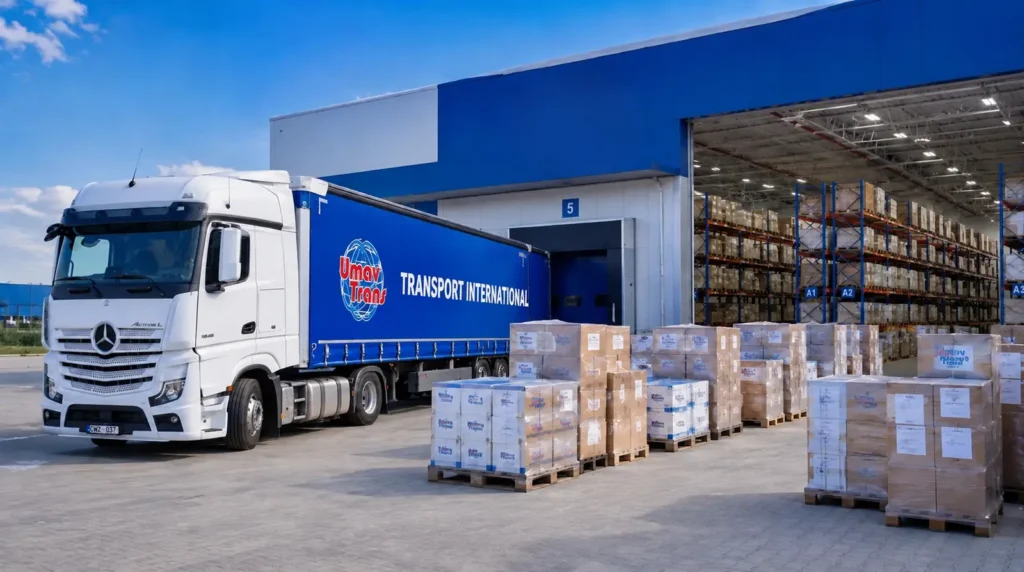
If you have goods to transport to/from Europe and need temporary warehousing, consolidation, groupage, full truckload or customs brokerage, the Umav Trans team can help you choose the right solution.
Contact us and provide details about the goods, route, volume, weight and desired deadline.