

In international trade, documents of origin play an important role in import and export. For many companies transporting goods to/from European countries, one frequently encountered document is the EUR.1 certificate.
The EUR.1 certificate is used to confirm the preferential origin of goods when the applicable conditions are met. It can be important for companies exporting or importing products and seeking preferential tariff treatment where trade agreements allow it.
For Moldovan companies working with partners in the European Union or other countries with preferential regimes, EUR.1 can be important during customs clearance. However, not every transport requires EUR.1; the need must be checked according to the goods, origin, exporting country, importing country and applicable trade rules.
Umav Trans provides international road transport, logistics and customs brokerage through its own customs brokers, including support with import and export documents and the EUR.1 certificate when required.
The EUR.1 certificate is a preferential origin document. It confirms that exported goods meet the rules of origin laid down in a preferential trade agreement.
Put simply, EUR.1 helps demonstrate that products have preferential origin in a particular country or region. If that origin is accepted under the trade agreement between the countries concerned, the importer may benefit from reduced or zero customs duties, depending on the product and applicable regime.
It is important to understand that EUR.1 is not merely a paper attached to a shipment. It must reflect a real situation: the goods must meet the preferential origin rules. If the product does not meet them, the certificate cannot be used solely to obtain a customs advantage.
Preferential origin means that a product is considered to originate in a particular country or region under the rules established by a preferential trade agreement.
Preferential origin is not always the same as the country from which goods are shipped. For example, goods may be dispatched from Italy but manufactured in another country. In that case, the country of dispatch and preferential origin may differ.
Several factors may be considered when determining preferential origin:
Therefore, before applying for or using an EUR.1 certificate, it is important to check whether the product meets the preferential origin rules.
The EUR.1 certificate may be required when a company exports or imports goods under a preferential trade regime and wishes to confirm the products’ preferential origin.
It may be required in situations such as:
However, EUR.1 is not mandatory for every shipment. If goods do not meet the preferential origin conditions or no applicable preferential regime exists, EUR.1 will not be required or cannot be used for tariff benefits.
The EUR.1 certificate may be required by several categories of companies involved in international trade.
These include:
For the exporter, EUR.1 may be needed to confirm the preferential origin of goods. For the importer, it may be important during customs clearance when requesting preferential tariff treatment.
For companies in the Republic of Moldova, EUR.1 is especially important in trade with the European Union and other countries or regions where preferential regimes apply.
For exports from Moldova to European countries, the certificate can confirm Moldovan preferential origin if the products meet the applicable rules.
For imports from Europe to Moldova, it can confirm the preferential origin of European products when the supplier/exporter can obtain it and the goods meet the required conditions.
For companies working on the Moldova–Italy–Moldova route, this document may be important in certain commercial operations, especially for products eligible for preferential treatment.
For more information about this route, see the page Moldova – Italy – Moldova transport
For exports, EUR.1 may confirm that exported products have preferential origin. This can help the importer in the destination country request preferential tariff treatment if the trade agreement permits it.
The exporter should check:
The exporter must provide correct information about the goods. If preferential origin cannot be demonstrated, the certificate should not be requested or used incorrectly.
For imports, EUR.1 can be important for a company bringing goods from a country with a preferential regime. The importer may present it during customs clearance to request preferential tariff treatment if the conditions are met.
The importer should have the document received from the exporter checked before transport or customs clearance.
The following should be checked:
Errors in the document can cause customs delays.
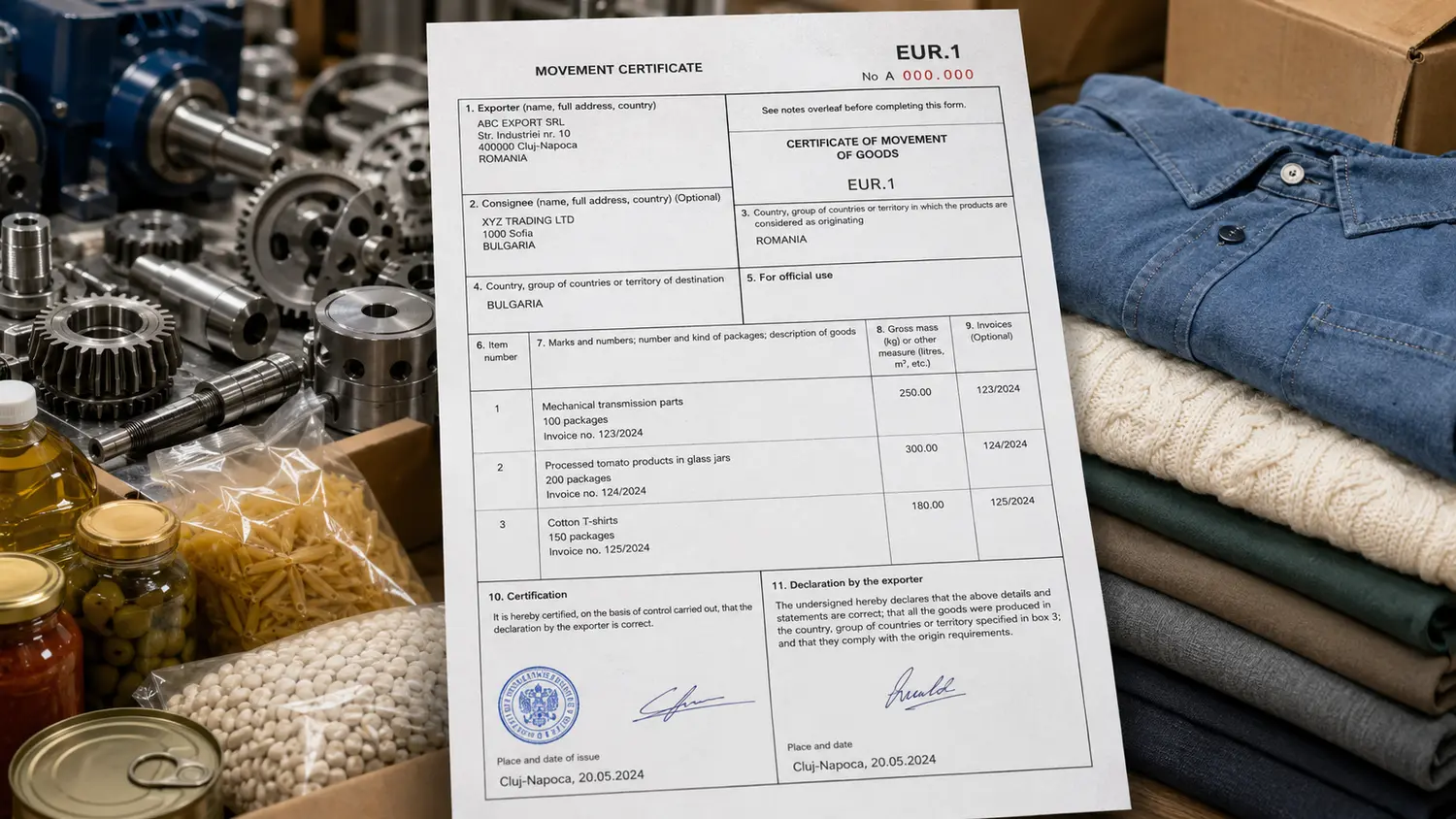
EUR.1 has a standardised format and contains information about the exporter, consignee, country of origin, destination country, description of goods and other data needed to confirm preferential origin.
In general, it may include:
Information in EUR.1 must match other transport and commercial documents such as the invoice, packing list and CMR.
Several documents may be required to obtain or check EUR.1, depending on the goods and operation.
Typically, the following may be requested:
The exact list may vary. Therefore, exporters or importers should consult the customs broker before loading or submitting documents.
For details about documents required for import/export, see the article:
Documents required for importing and exporting goods.
EUR.1 should not be considered separately from other documents. It must be consistent with the commercial invoice, packing list, CMR and customs documents.
The commercial invoice shows the value of the goods, seller, buyer and product description. The packing list shows how the goods are packed, the number of packages and pallets, weight and other logistics details. The CMR confirms international road transport.
If information differs between documents, additional questions may arise. For example, if the commercial invoice states one product while EUR.1 contains a different or overly general description, the customs broker may request clarification.
To avoid problems, all documents must be checked together.
In international road transport, documents must be prepared before loading. The driver, carrier, shipper, consignee and customs broker may need correct documents for the process to proceed without delay.
The EUR.1 certificate may form part of the transport document set, together with:
For companies transporting goods on European routes, cooperation between the carrier and customs broker is important. Checking documents in advance reduces the risk of delays at the border or during clearance.
Umav Trans provides international road transport and customs brokerage, supporting better coordination of transport and documents.
For details about the transport service, see the page International road transport.
EUR.1 is issued by the competent authority in the exporting country based on the application and documents submitted by the exporter or its representative.
The exact procedure may differ by country according to applicable legislation and rules. In many cases, the customs broker can help prepare documents and verify whether goods qualify for preferential origin.
The certificate should be requested correctly and on time so that it is available when transport is organised.
In some situations, preferential origin may be confirmed not by EUR.1 but by an origin declaration on the invoice or another commercial document. This depends on applicable rules, goods value, exporter status and the relevant trade agreement.
An origin declaration may be simpler in some cases, but it does not automatically apply to every shipment. EUR.1 may be required for certain goods or values, while an origin declaration may be accepted for others.
Therefore, every operation should be checked separately.
In practice, many problems arise from incorrectly completed documents or misunderstanding the rules of origin.
Common mistakes:
To avoid these situations, documents must be prepared and checked before transport.
The customs broker can help a company understand whether EUR.1 is required, which documents to prepare and how commercial papers should be aligned with customs documents.
Customs broker support may include:
Umav Trans provides customs brokerage through its own customs brokers, enabling better coordination between transport, documents and customs procedures.
For details, see the page Customs brokerage.
Moldova–Italy–Moldova is one of Umav Trans’s main directions. For companies importing goods from Italy or exporting products to Italy, EUR.1 may be relevant in certain situations depending on product origin and the applicable regime.
For example, a company importing goods from Italy to Moldova may need proof of preferential origin if it seeks preferential treatment on import and the goods meet the necessary rules.
Likewise, a company exporting products from Moldova to Italy may need EUR.1 or other proof of origin depending on the product and the partner’s requirements.
For companies working regularly with Italy, checking origin documents in advance can help avoid delays and additional clarification.
For details about the route, see the page Moldova – Italy – Moldova transport.
Before exporting or importing, it is useful to check several basic points:
These questions help identify the necessary documents in advance.
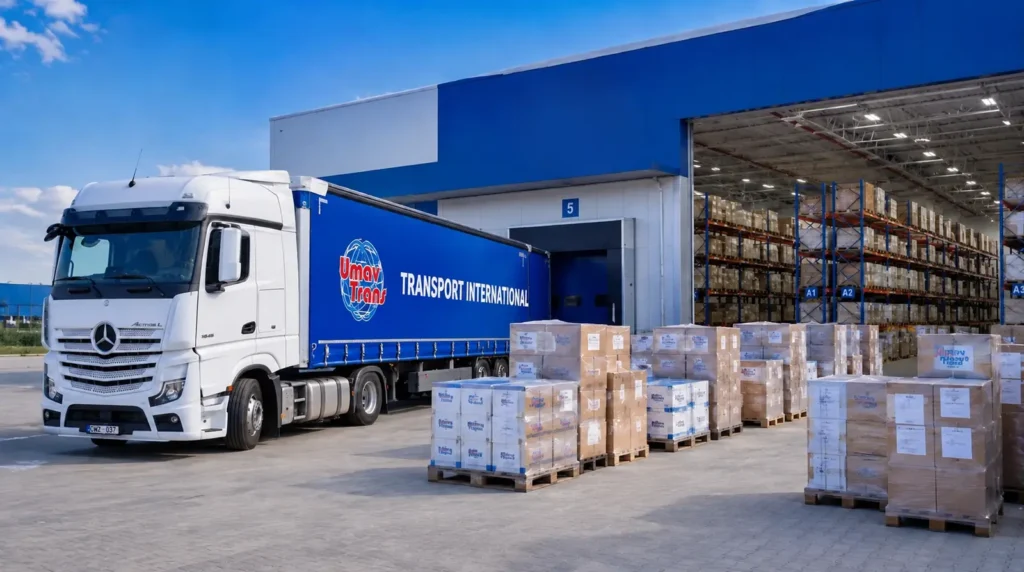
If you import or export goods to/from European countries and are unsure whether you need EUR.1, the Umav Trans team can provide logistics support and customs brokerage.
Contact us and provide details about the goods, origin, route, documents and desired deadline. We will recommend the right solution for transport, documents and customs clearance.