



International transport has become increasingly complex for Moldovan companies. Customers want fast answers, clear deadlines, correct documents and efficient communication. At the same time, transport companies must manage trips, drivers, trucks, documents, costs, routes, warehousing, customs brokerage and requests arriving through several channels.
In this context, relying only on Excel sheets, phone messages, emails and separate notes becomes increasingly difficult to control. Information gets lost, documents are searched for in several places and decisions take longer.
That is why automating logistics processes is no longer merely a modern option but a necessity for companies that want to work more clearly, quickly and professionally.
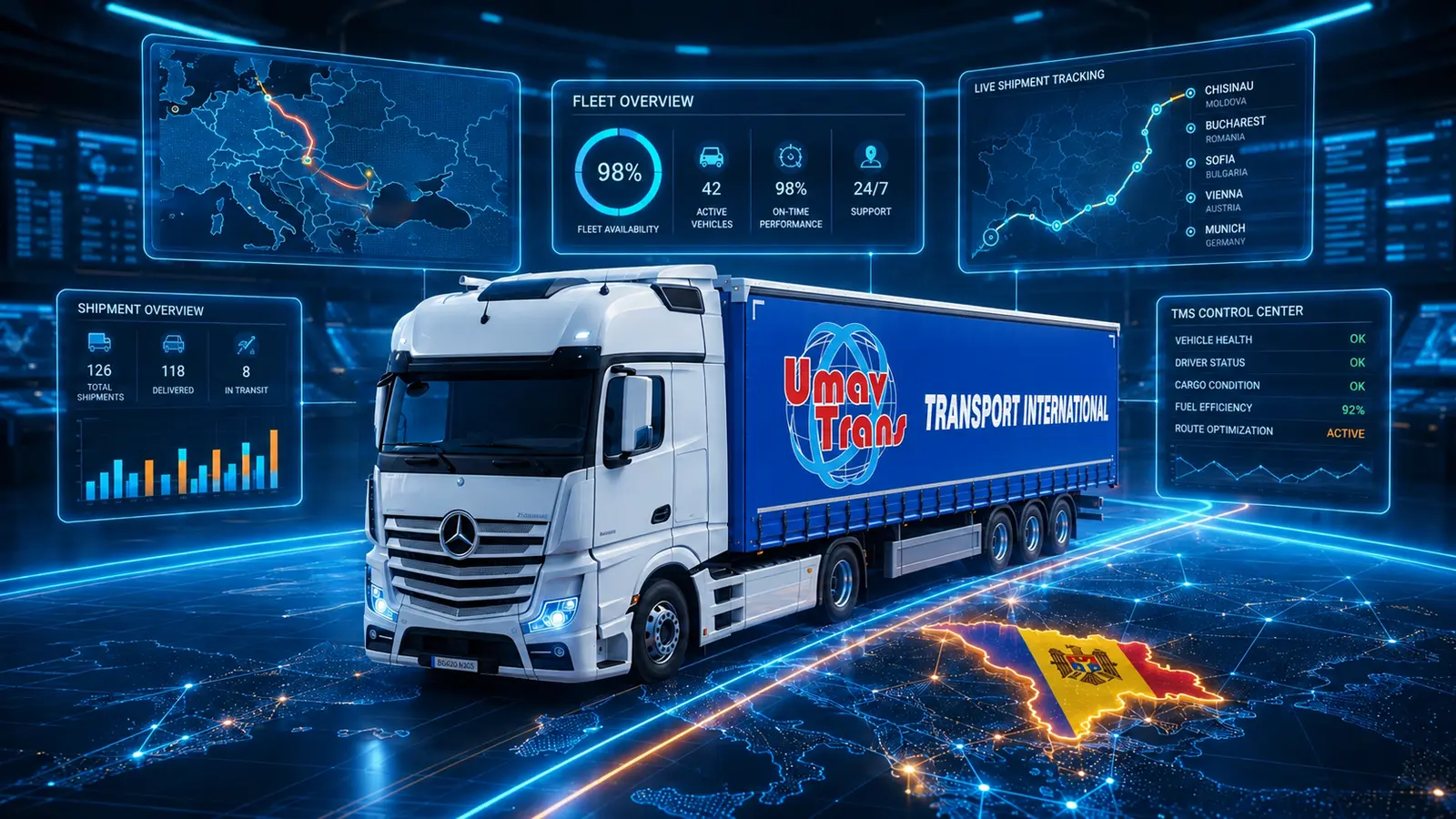
Umav Trans uses proprietary logistics automation software developed around the way the company actually organises international transport. The system helps the team manage orders, trips, documents, transport statuses and internal communication more effectively.
Automation in transport and logistics means using a digital system to organise more quickly and clearly the processes that were previously handled manually.
In practice, automation can include:
The aim is not for software to replace people, but to give teams a better working tool. Instead of logistics managers searching through messages, emails and separate files, important data can be centralised in an internal system.
Many Moldovan transport companies operate on international routes, including routes to the European Union. This means deadlines, documents, customs formalities, drivers on the road, trucks in transit and customers waiting for updates.
In such an industry, every delay matters. Missing information can block a trip. A lost document can delay customs clearance. An incorrectly entered order can create additional costs.
For Moldovan companies, automation helps with:
In international transport, speed and clarity can make the difference between successful cooperation and a difficult customer experience.
Umav Trans uses proprietary software to organise logistics operations. It was designed around the company’s real processes: international transport, groupage, full truckload, the Moldova–Italy–Moldova route, warehousing, consolidation and customs brokerage.
The internal system helps the team work in a more structured way and access the information needed for each transport operation more quickly.
| Logistics process | How automation helps |
|---|---|
| Transport orders | customer, route and goods data are centralised |
| Trip planning | the team can see active transport operations more clearly |
| Transport status | each trip can have internal stages and updates |
| Documents | documents can be tracked in relation to the transport operation |
| Customs brokerage | required documents can be coordinated more clearly |
| Warehousing and consolidation | goods can be associated with locations, suppliers and deliveries |
| Internal communication | less information is lost in separate messages |
| Reporting | management can see operations more clearly |
This approach helps the company avoid relying solely on memory, messages and isolated files.
An international transport operation can pass through several stages. If each stage is managed manually, many risks arise: incomplete data, missing documents, confusion between departments or time lost on repeated checks.
Automation can make the workflow clearer.
| Stage | What happens |
| 1. Customer enquiry | details are received about the goods, route, weight, volume and deadline |
| 2. Order registration | information is entered into the internal system |
| 3. Selecting the solution | groupage, full truckload, warehousing or consolidation |
| 4. Trip planning | the truck, route and responsible person are assigned |
| 5. Document checks | the invoice, packing list, CMR and customs documents are tracked |
| 6. Transport coordination | the team tracks the transport status |
| 7. Customs brokerage | customs brokers can check the required documents |
| 8. Delivery | the final status is updated |
| 9. Internal reporting | data remains available for analysis and records |
Such a workflow reduces improvisation and helps the team work in a more organised way.
The order is the starting point of every transport operation. If order information is incomplete or difficult to find, the entire process can become more complicated.
In proprietary logistics software, an order can include:
| Field | Example |
| Customer | Importing company |
| Route | Italy–Moldova |
| Transport type | Groupage |
| Goods | Palletised goods |
| Pallets | 4 Euro pallets |
| Weight | 1,200 kg |
| Volume | 5 m³ |
| Additional services | Customs brokerage |
| Status | Being planned |
When this information is in one place, the team can respond more quickly and avoid repeated questions.
Trip planning is one of the most important parts of logistics operations. A transport company needs to know which trucks are available, which trips are active, which loadings are upcoming and which transport operations require coordination.
Through its proprietary software, Umav Trans can organise trip and transport information more clearly.
An internal system can help track:
| Status | What it means |
| Enquiry received | the customer has submitted the request |
| Under review | the team checks the route, volume and availability |
| Being planned | the transport operation is operationally prepared |
| Documents under review | the required documents are being checked |
| Ready for loading | the goods can be collected |
| In transit | the truck is on the route |
| At customs | the transport operation is at the customs stage |
| Delivered | the goods have reached their destination |
| Completed | the trip is closed internally |
Statuses help the team quickly see where each transport operation is and where action is needed.
Documents are one of the most sensitive areas in international transport. The commercial invoice, packing list, CMR, customs documents and EUR.1 certificate must be tracked correctly.
If documents are managed only by email or WhatsApp, problems quickly arise:
Automation helps by linking documents to the relevant transport operation. The team can then see more easily which documents are available and which are missing.
| Document | Role |
| Commercial invoice | confirms the value and transaction |
| Packing list | shows the packaging, weight and number of parcels/pallets |
| CMR | international road transport document |
| EUR.1 certificate | confirms preferential origin when required |
| Customs documents | required for import/export |
| Other documents | depend on the type of goods |
For details about documents, see the article: Documents required for importing and exporting goods
Umav Trans provides customs brokerage through its own customs brokers. This component is particularly important for international transport operations involving import or export.
Automation can support coordination between logistics and customs brokerage. When transport documents and data are organised internally, brokers can check the required information more quickly.
Benefits:
For details about this service:
Customs brokerage: /servicii/brokeraj-vamal/
Groupage transport involves organising goods from different customers in one shared transport operation. This means several collection points, more documents, different volumes and more information to track.
Without a clear system, groupage can become difficult to manage.
Through automation, the team can track:
| Customer | Goods | Pallets | Weight | Status |
| Customer A | commercial goods | 2 | 600 kg | collected |
| Customer B | equipment | 1 | 350 kg | in the warehouse |
| Customer C | textiles | 3 | 900 kg | documents under review |
| Customer D | industrial parts | 2 | 700 kg | ready for loading |
This type of record supports consolidation and more efficient truck planning.
For full truckload transport, automation helps organise a dedicated trip for one customer. The deadline, available truck, documents, route and communication with the customer all matter.
For a full truckload, the internal system can help with:
Full truckload transport is suitable for large loads, and a digital workflow helps avoid confusion and maintain control over the trip.
Warehousing and goods consolidation become easier to manage when information is centralised. If goods come from several suppliers or on different days, the team must know what has been received, what is due for transport and which documents are available.
Proprietary software can make the process clearer:
| Goods | Supplier | Location | Pallets | Status |
| Batch 1 | Italian supplier | partner warehouse | 3 | received |
| Batch 2 | Italian supplier | being collected | 2 | awaiting collection |
| Batch 3 | German supplier | partner warehouse | 4 | documents under review |
| Batch 4 | Austrian supplier | in transit | 1 | being consolidated |
For companies working with several suppliers, this level of clarity is very important.
Recommended article: Warehousing and goods consolidation for international transport
Communication is essential in transport and logistics. Dispatchers, logistics managers, customs brokers, drivers and administrative staff must work from the same information.
When each person has different information, confusion arises.
Automation helps by:
Internal software does not eliminate communication; it makes it more organised. Instead of starting every time with “where is the information?”, the team can work directly with the available data.
Automation does not only help the company internally. It directly influences the customer experience.
A customer requesting transport usually wants:
When the team has centralised data, it can respond better and faster.
| Without automation | With automation |
| information searched for manually | centralised data |
| delayed responses | faster responses |
| risk of missing documents | documents tracked more clearly |
| confusion between departments | a more orderly internal workflow |
| difficulty tracking status | clearer statuses |
| manual reporting | better records |
For B2B customers, this difference matters greatly, especially when transport operations are recurring.
Moldova–Italy–Moldova is Umav Trans’s main direction. On this route, automation helps organise regular transport, whether groupage, full truckload, warehousing or customs brokerage.
On a frequent route, the internal system helps with:
For details: Moldova – Italy – Moldova transport.
Not every process needs to be automated on the first day. But repetitive processes that consume considerable time and cause errors are the best candidates.
| Process | Why it is worth automating |
| Order registration | reduces duplicate data |
| Transport statuses | provides visibility to the team |
| Documents | reduces the risk of missing documents |
| Trip planning | helps organisation |
| Customer records | preserves the history of cooperation |
| Costs | supports internal analysis |
| Warehousing and consolidation | clarity about the goods |
| Customs brokerage | better document coordination |
| Reporting | management sees operations more quickly |
Automation should begin with the company’s real problems, not with the desire to have “nice-looking software”.
An important point: automation does not replace the experience of logistics professionals. In transport, sound decisions are still made by specialists—logistics managers, dispatchers, customs brokers, drivers and operational staff.
Software helps the team work better, but people remain essential for:
In other words, automation provides order and speed, while the team contributes experience and judgement.
Growing companies that continue to work entirely manually often encounter the same problems.
Common mistakes:
Automation is designed precisely to reduce these problems.
Automation does not need to be complicated. It can be seen in concrete tasks.
| Activity | Manual | Automated |
| Finding an order | in email, phone and Excel | in the system |
| Checking documents | repeated questions | clear status |
| Tracking the trip | calls and messages | internal status |
| Reporting | manual centralisation | data available |
| Internal communication | fragmented information | shared data |
| Customer history | difficult to track | saved in the system |
For a transport company, these differences accumulate every day and provide greater control.
The transport market is competitive. Customers quickly compare quotes, ask several carriers and choose companies that respond clearly and professionally.
For Moldovan companies, automation helps with:
Companies that organise their processes digitally can manage more transport operations without allowing manual workload to grow chaotically.
For Umav Trans customers, automation means a better-organised process behind the scenes. The customer may not always see the internal software, but experiences its effects:
This is one reason why logistics automation matters: it is not merely an internal investment, but an improvement to the service provided to the customer.
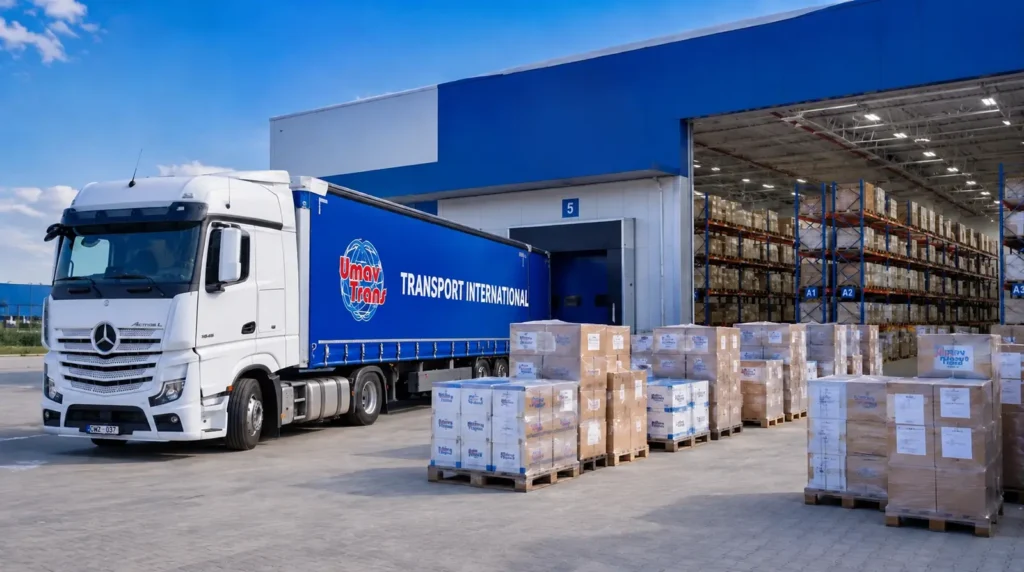
If you have goods to transport to/from Europe and are looking for a company that works in an organised way, with clear logistics processes and document support, Umav Trans can help.
We provide solutions for international road transport, groupage, full truckload, warehousing, goods consolidation and customs brokerage through our own customs brokers.